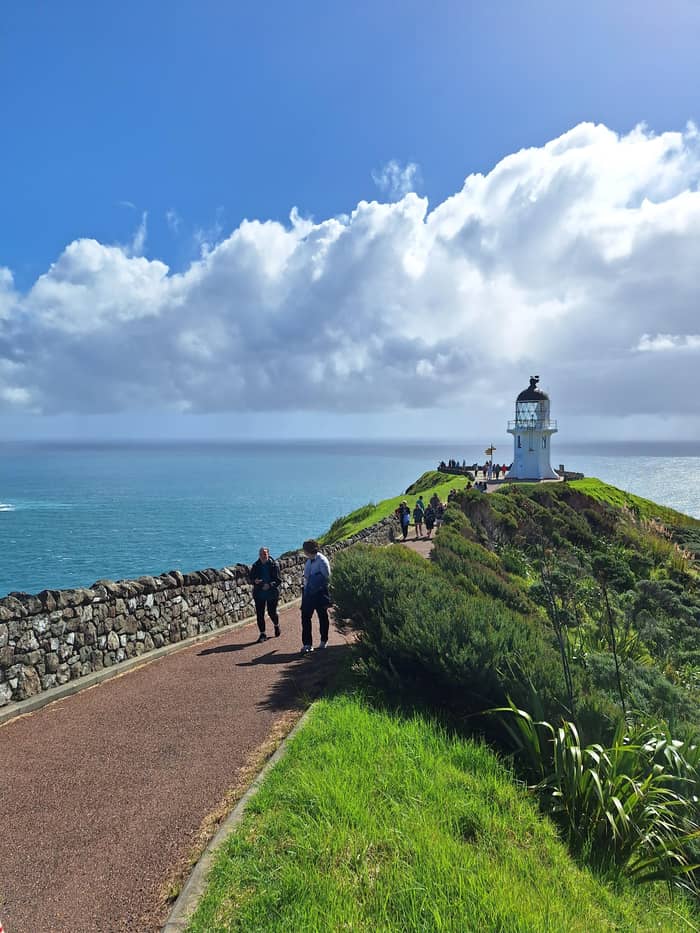
Most reviewed
Paihia coach day
Beach bus and lighthouse
- Length11 hours
- BoardingConditions permitting
- BringA change of clothes
Clickable checklist
Preparation · 10 items
Check things off as you go; your progress is kept on this device.
0 / 10 ready
You are ready. Only the date is left: your day out to the lighthouse and back.
Secure your spotThe Cape Reinga sand dunes at Te Paki rise like a desert beside a stream. Here is how high they are, how a sandboard run works, what the Department of Conservation warns about and what to pack.
Editorial team, capereingatour.top · Updated November 8, 2026 · A 7 min read
Nothing on the drive north prepares you for the Te Paki dunes. One moment you are on a farm road, the next you are looking up at a wall of pale gold sand that the Department of Conservation puts at around 150 m high.1 Northland Inc calls them the most impressive dunes in Taitokerau Northland, with some rising up to 150m.2 Up close they feel taller still, because there is nothing to give them scale except the people climbing them.
DOC describes the giant dunes as a popular stop for people visiting Cape Reinga and Ninety Mile Beach, and you do not have to slide down them to enjoy them.6 Walking up for the view is reason enough: on one side the stream winds toward the sea, on the other the sand ripples away in every direction. Early morning and late afternoon light picks out every ridge and footprint, and the colors change by the minute.
The dunes also matter to the people of this land. Ngāti Kuri describe them as one of the most striking landscapes in their rohe, with cultural and environmental significance for the iwi.7 Treat them as you would any special place: stay off the fragile edges, take your rubbish home and leave the sand as you found it. The Cape Reinga sand dunes are a playground for visitors, but they were somebody's landscape long before the first board arrived.
Your options
| How | What you get | Good to know |
|---|---|---|
| Paihia coach day | Sandboarding stop | Conditions permitting |
| Small-group day | Sandboarding session | Scheduled for 1 hour |
| Hire on site | Board at the dunes | Shared slope at midday |
| Walk only | Views from the crest | Climb is hard work |
Tour details from the listings; hire from Northland Inc; walking from DOC.2,6
Sandboarding near Cape Reinga is simple in theory. You carry a board up the slope, lie on it or sit on it, and let gravity do the rest. DOC's own description is to climb to the top of the giant dunes and surf down.12 The climb is the hard part: soft sand slides back under every step, so a short ascent can leave you breathing hard. Pace yourself and stop to enjoy the view halfway.
Boards are easy to find. Northland Inc says sandboards can be hired at the dunes, and that the dunes are a regular stop on tours heading for the cape and the beach.2 DOC adds that toboggans can be hired from local tourism operators, with details from the Kaitaia i-SITE.13 If you arrive on your own, expect to share the slope with tour groups in the middle of the day. Ask how to steer and how to stop when you pick a board up, then try both on a short run.
On the Paihia coach day sold on this site, sandboarding is part of the plan, conditions permitting, and its listing tells you to pack spare clothes for the occasion. The small-group day trip from Paihia, Kerikeri or Kaitaia schedules sandboarding on the Te Paki Stream dunes for 1 hour. Either way the slide itself is quick, and most of your time goes into climbing back up for another run.
The Department of Conservation is direct about the risk. People have been seriously injured sandboarding at Te Paki, and someone has died.3 The dunes are long and steep, and boards go very fast.15 DOC also points out that emergency services are a long way from Te Paki, so if something goes wrong it takes a long time for help to arrive.16 That last point is the one to remember on the slope.
DOC's advice is practical. Start on a small slope or a short distance to test yourself before you try the full height.9 Walk your chosen line first and look for hidden bumps or debris.8 Keep the board under control and your speed low: it is easy to go fast quickly, lose control and tumble.11 Dragging your feet slows you down, so practice that on the first short run. Falling is part of learning, so wear clothes you do not mind scraping.
Other rules protect the people around you. Check that your line is clear of anyone else before you start sliding.10 And never board down a dune that runs into the stream where vehicles drive, because you could end up in front of a car or bus.4 Pick a face that runs out onto flat sand away from the stream bed, and keep an eye on where your friends are standing at the bottom. A quick word with your group before the first run saves trouble later.
Is it for you?
Your confidence and your company decide it.
If I have young kids
Use the low slopes
DOC advises starting small to test your abilities.9
If I want speed
Go, but stay in control
Boards go very fast on the long, steep faces.15
If I hate getting sandy
Walk up for the view
DOC says you can simply walk on the dunes.6
If I have no board
Hire one on site
Northland Inc says boards can be hired there.2
If I want it organised
Join a day trip
The Paihia day includes boarding, conditions permitting.
Tours with a dune stop
Most reviewed
Beach bus and lighthouse
Smaller group
Up to 11 guests
Flexible
Drive and hire a board
Northland Inc calls sandboarding a fun activity for all ages, and the dunes do suit a family afternoon.2 Smaller children are happiest on the lower slopes, where a run is short and the climb back is easy. Older children and adults can work up to the longer faces once they have shown they can stop. Sand surfing at Cape Reinga is less about skill than about judging your speed. Agree on a meeting point at the bottom before anyone sets off.
Dress for sand everywhere. Northland Inc suggests wearing socks in summer, because the sand gets seriously hot underfoot.5 Spare clothes are on the site tour's packing list for sandboarding, and they make sense on any visit. Long sleeves protect your arms on a fall, and sunglasses keep blowing sand out of your eyes. Leave good cameras in a zipped bag. Tie long hair back, or it will be full of sand for days.
DOC's general kit list for the reserve is worth borrowing too: sunscreen, a hat and sunglasses, plus insect repellent in summer.17,18 Carry water, because the climb is thirsty work under an open sky. After the last run, shake out your shoes and pockets before you get back in the car or bus: the sand will travel home with you otherwise. A small towel in the bag helps more than you would expect.
Board with a guide
Enter your party size and see what dune-stop day trips cost.
Compare 2 alternatives
Enter your party size and see what dune-stop day trips cost.
≈
View≈
ViewAll amounts are from-prices on GetYourGuide, converted at the ECB reference rate. Exact prices are shown at booking.
A safe run
Before
Check for obstacles and bumps first.8
First go
Test yourself on a short distance.9
At the top
Make sure nobody is in your way.10
On the way
Stay in control to avoid a tumble.11
At the bottom
Never run out into the vehicle route.4
The giant sand dunes near Cape Reinga have a long history. DOC explains that extensive coastal dune fields formed across Northland in the last few million years.21 Sand from eroded undersea volcanoes offshore, and from volcanic material worn down in the central North Island, was carried north along the coast by longshore drift.22 Some of the grains under your board may have started their journey far to the south.
The dunes are still moving. DOC notes that in dry seasons they tend to advance, and in wet seasons they pull back.23 That push and pull shapes the land around them, where farmland, remnant forest and wetlands meet the sand. The dunes also hold a record of the past: bones of moa, kōkako and tuatara have turned up in the sand.24 What looks like an empty desert is in fact a living archive. Come back in a few years and the shapes will have changed.
Life on the sand is tough but real. Pīngao, a native sedge, can live in moving sand and grows on the windy, seaward side of dunes.25 The katipo, New Zealand's poisonous native spider, is a dune specialist; the female can bite but is a retiring animal that only attacks when frightened.26,27 Leave driftwood and plants alone, and you are very unlikely to meet one. Watch where you put your hands when you sit down to rest.
Video
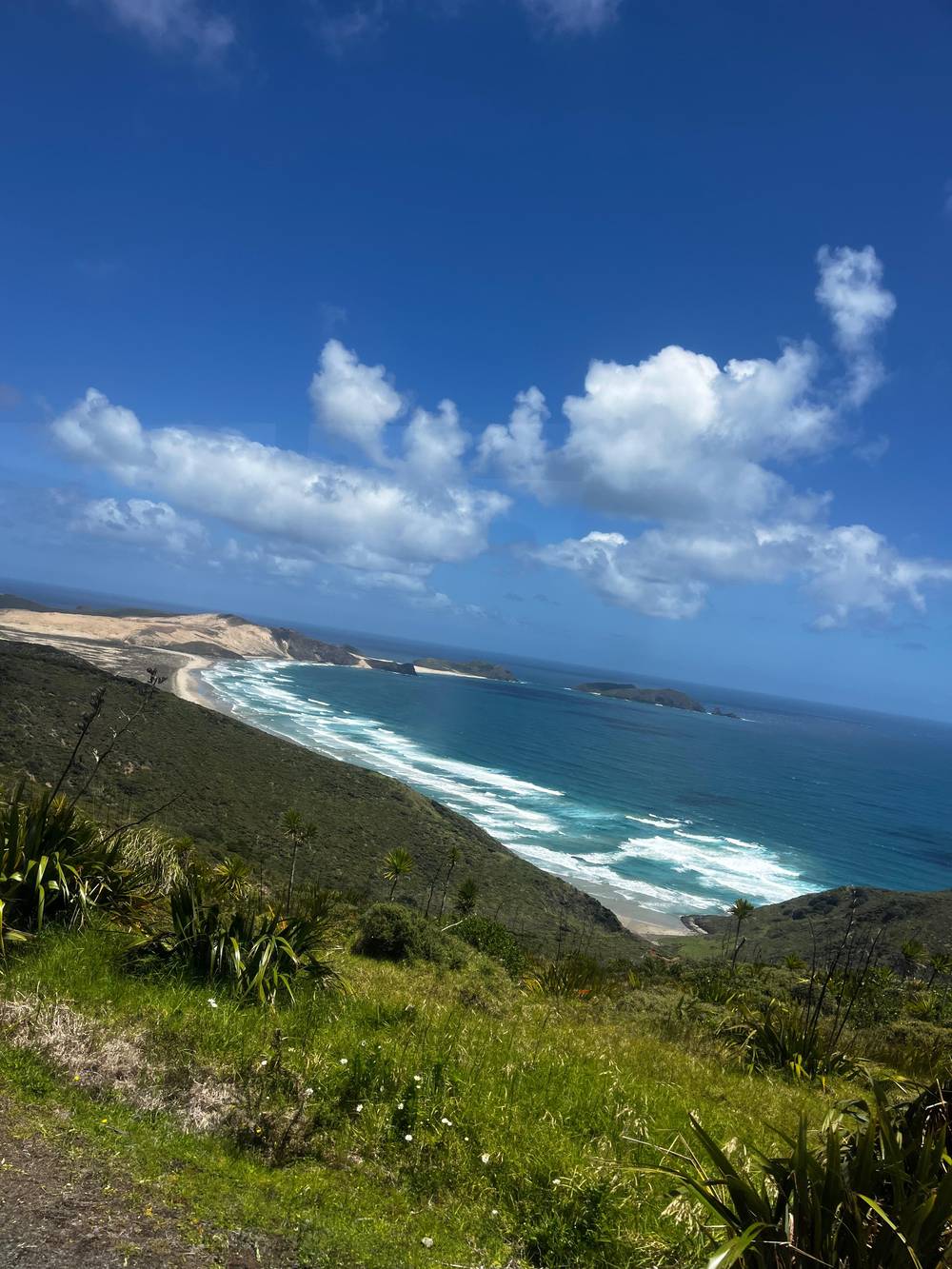
Craig & Chantal - Being Bedingfield on YouTube · Until you tap play, no video is loaded.
Emergency services are far from Te Paki, so if there is an accident it takes a long time to get help.
If you drive yourself, the turnoff onto Te Paki Stream Road is on the left just past the DOC Te Paki field base as you head north, around 5 min drive from Waitiki Landing.28 The road runs to a car park at its end. From there you walk to the sand. DOC asks visitors not to drive on the dunes and to use the car park provided, because the dune environment is fragile.19 DOC warns that thefts have happened in the area, so take valuables with you.29
The stream itself is a vehicle route out of Ninety Mile Beach, and DOC limits it to 4WD vehicles only.30 Coaches use it too, so stay alert near the water. Dogs are not permitted at the dunes.31 Before you set out, DOC suggests checking the MetService Northland regional forecast: wind and weather shape any day on exposed sand.20 On a calm day the sand is far kinder to eyes and cameras.
Most visitors combine the dunes with the cape on the same day. Tours that drive Ninety Mile Beach usually stop here on the way, and the site tour's listing notes that the beach and the sandboarding are subject to tides and weather.2 If you are on your own, the dunes make a good last stop on the way south, when the light is softer and the slope quieter. Either way, it is the most playful hour of a day at the cape.
FAQ
The listing includes sandboarding when conditions allow and tells you to pack spare clothes for it.
DOC says dogs are not permitted at the site.31
Pack a spare outfit, plus socks for summer when the sand heats up.5
Sources
Heading for the top of the North Island? Ask a real person here.