Full day
Go on the tour
Beach, dunes and the light
- Length11 hours
- DrivingDone for you
- BeachTide permitting
Pick-for-me guide
The short version
Cape Reinga is worth it if a long day suits you: a sacred headland, a lighthouse and meeting oceans reward the hours, but travelers with a single day in the bay may do better elsewhere.
Verdict essentials
Two taps, a straight answer
Answer honestly about time and patience, and see the trip that suits you, or the one to do instead.
Your top pick
from $114
The full day: 11 hours with lunch, the beach drive and the dunes, guides rated 4.7.
Your top pick
from $135
10 hours for up to 11 guests, with 1 hour at the cape and 1 hour of sandboarding.
Your top pick
from $320
4.5 hours from the Bay of Islands, with flights and a guided drive at the top.
Your top pick
from $99
With a single day, a 4.5-hour Hole in the Rock cruise from Paihia gives you more time to enjoy it.
The far north asks for a whole day and gives back a headland like no other. Here is what you see, what you sit through, and who comes home glad they went.
Editorial team, capereingatour.top · Updated November 8, 2026 · A 8 min read
Summary view
Ask what Cape Reinga is famous for and the answers turn out to be linked. To the Department of Conservation it is the place of greatest spiritual meaning for Māori anywhere in the country, the point from which spirits depart.2 Tourism New Zealand adds the picture many take home, the Tasman and the Pacific churning together off the point.1
Then there is the tree. At the tip of the cape grows a gnarled pōhutukawa believed to be more than 800 years old, from which, in Māori oral history, the spirits leap into the ocean to return to Hawaiki.1 It is small and easy to miss from the path, and it is the reason the headland is treated with such care.
Finally, the lighthouse, first lit in May 1941 and the last watched lighthouse built in the country, stands 165m above the sea.5 Put those together and you have a place that is part landmark, part sacred site and part simple wonder at the end of the land. Whether that is worth a long day depends on what moves you.
Give and take
| You get | You give | Note |
|---|---|---|
| A sacred headland | No food at the cape | DOC6,2 |
| The lighthouse walk | 800 m each way3 | DOC |
| A ride on the beach | Tide and weather risk | Listing |
| Te Paki dunes | A change of clothes | Up to 150m high14 |
| Lunch on the tour | An 11-hour day | Listing |
The beach run and the sandboarding depend on conditions on the day.
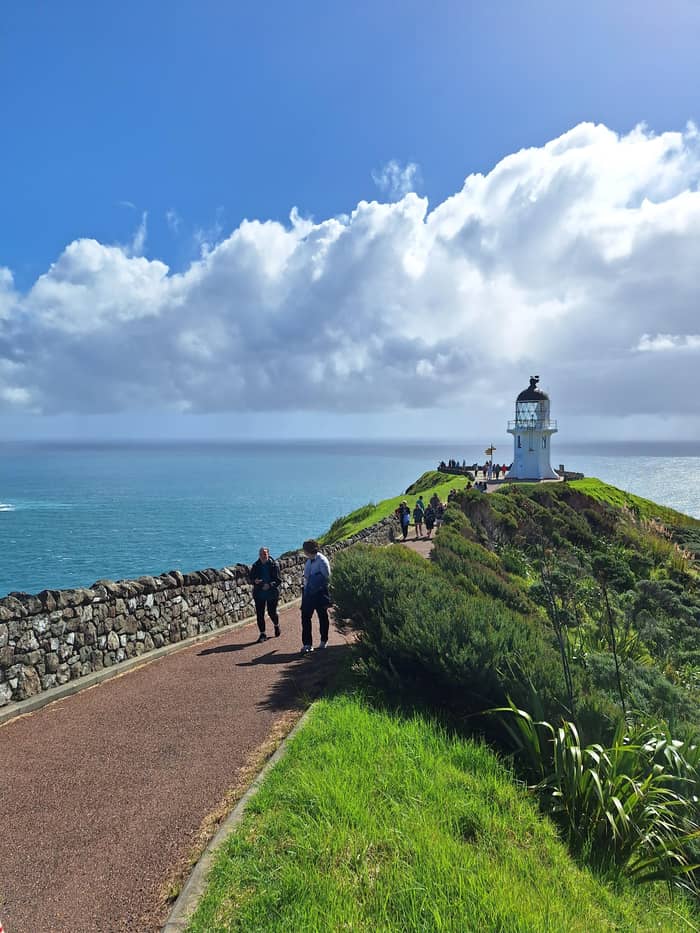
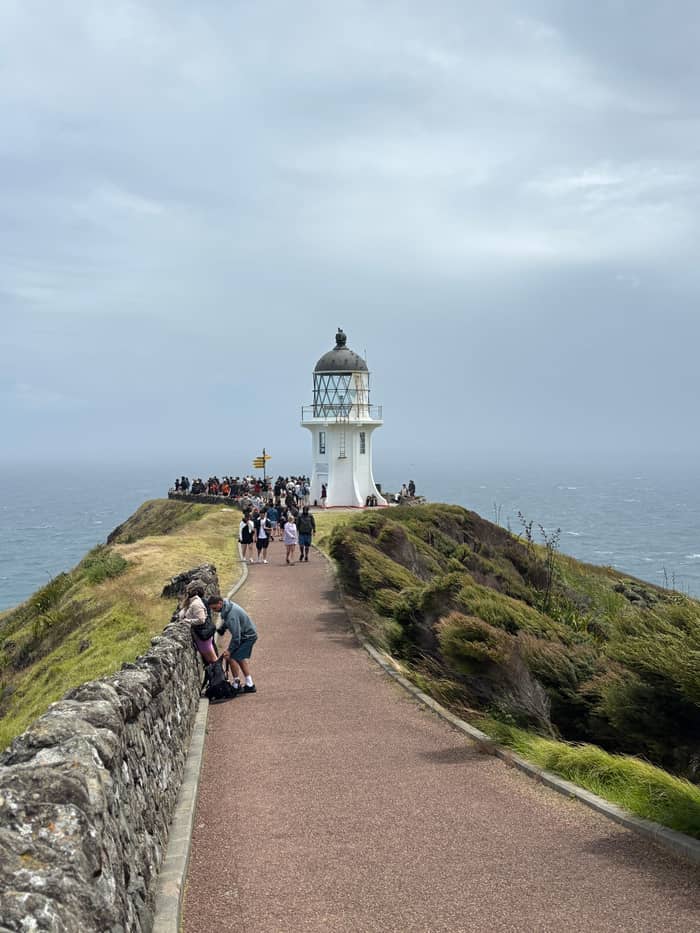
The walk from the car park is 800 m each way, about 10 minutes on an easy track that suits children and buggies.3 It ends at the lighthouse and the lookouts. Cape Maria van Diemen and Motuopao Island fill the western view and Spirits Bay the eastern one, with the Three Kings Islands a faint shape far out when the air is clear.7
Look offshore to the west of the point and you may see the meeting of the oceans over the Columbia Bank, a belt of broken water where the currents collide.8 On a calm day it is a line of white, on a wild one it erupts into spray. Neither is guaranteed, and that unpredictability is part of the appeal.
Expect wind. The Department of Conservation warns that the cape is very exposed, that its weather changes fast and that strong wind is common.9 Keep to the sealed path, since the ground falls away sharply near the light, and hold on to small children.10 A coat and a hat with a strap matter more here than a good camera.
This is the honest part. Getting from Paihia to Kaitaia takes 118 km and 1 h 40 min behind the wheel, and Cape Reinga waits a further 111 km up the road.11,12 Tourism New Zealand puts the Kaitaia to cape drive at about 1.5 hours each way.17 Even before the stops, that adds up to a long day on the road. The road itself is pleasant, through farmland, forest and glimpses of both coasts, but it is a lot of it, and the last stretch north of Waitiki Landing is 20 km of highway with no towns at all.12
The coach day from Paihia runs for 11 hours, and the small-group alternative for 10. A recent reviewer of the coach day described plenty of time on the bus and said the distance made that inevitable. Others say the guide made the hours pass quickly, with songs, stories and stops. That is the real secret of the coach day: the person at the front decides whether the hours drag or fly, and the guides here score 4.7 from 958 reviews.
Is Cape Reinga worth the drive if you take your own car? It depends on whether you enjoy driving rural roads. Northland Inc warns of long gaps between service stations, gravel roads where rental insurance needs checking and patchy mobile coverage.18,19 On a tour, a professional does the driving, and you can watch the landscape change.
Your verdict
Full day
Beach, dunes and the light
Slower trip
A night near the top
Other plans
Short on time or patience
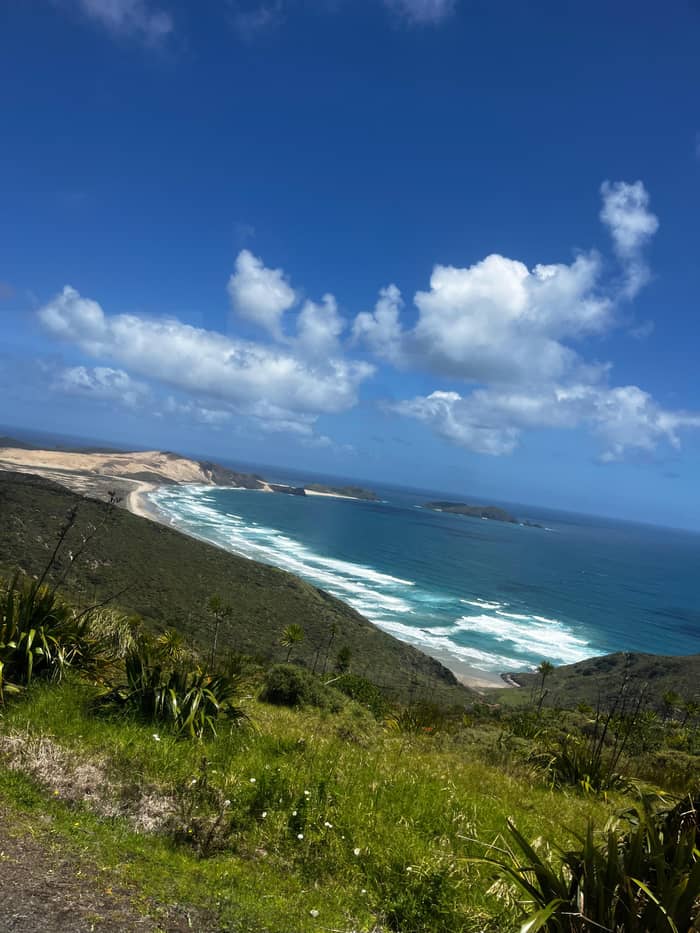
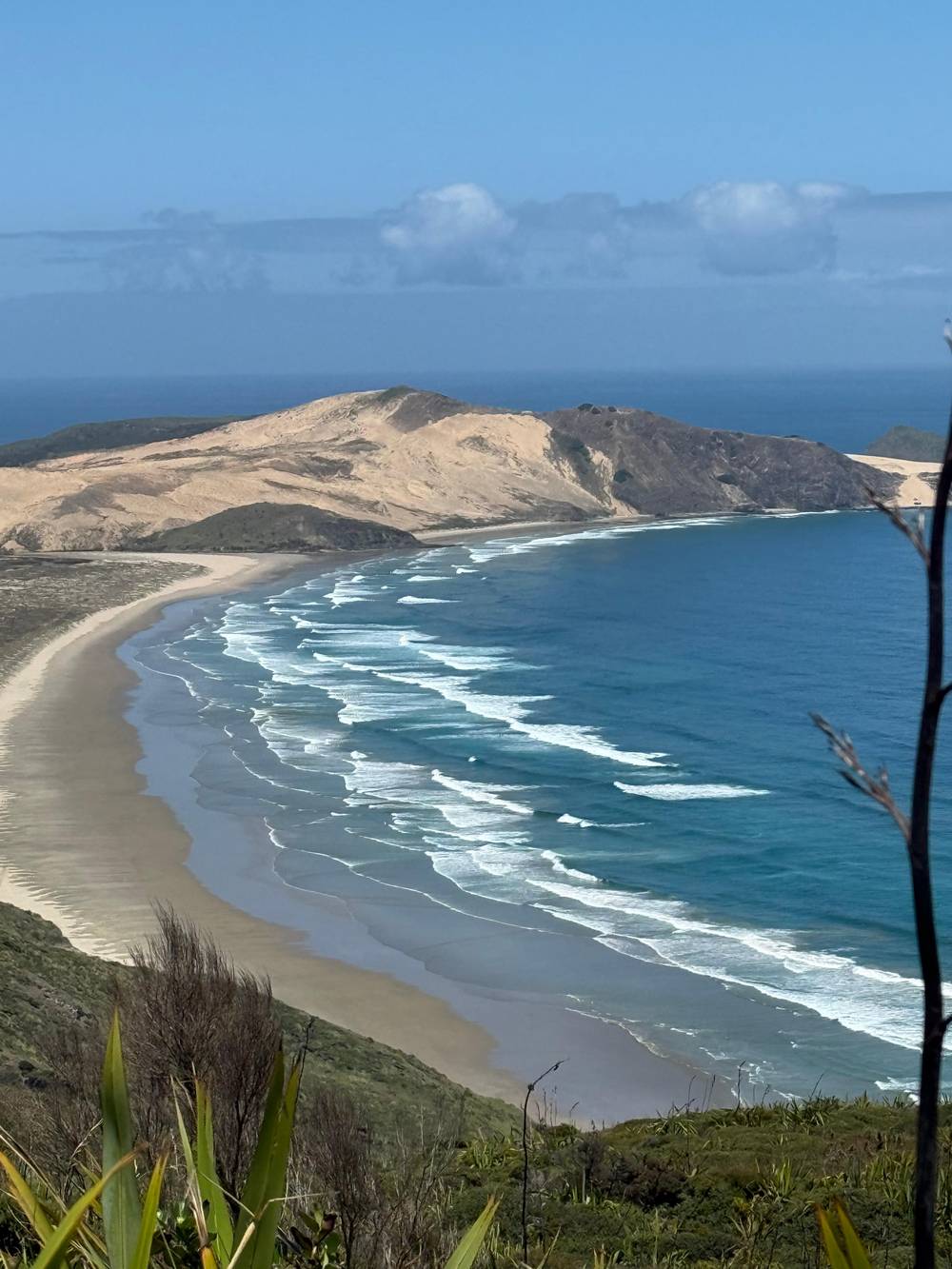
The drive itself can turn out to be the highlight. Ninety Mile Beach measures 88 kilometres in truth, and Tourism New Zealand calls it officially a highway that only a 4WD should tackle, and then only with the tide in its favour.20,15 On the coach day you ride it in a 46-seater made for sand. Rolling along hard sand with surf on one side and dunes on the other is unlike any road you have driven, and it is something a visitor in a hire car cannot do.
Then come the dunes at Te Paki, which rise up to 150m in places and where Northland Inc suggests trying sandboarding, a fun activity for all ages in its words.14 The coach day includes boarding when conditions allow. Reviewers of every age mention it, parents and grandparents as well as children, which says something about how gentle the run can be.
If you only care about the lighthouse, the beach half may feel like padding. If you have never ridden a bus along a surf beach or slid down a dune taller than a building, it may be the part you talk about most. Decide which traveler you are before you judge the length of the day. Ask yourself which picture you want to bring home, and you will know whether the beach hours are filler or the main event.
The shape of the day
Start
Meet at the operator office in town.
On the way
Buy a drink or snack at your own expense.
At the cape
An easy path of 800 m in each direction.3
Lunch
Food is kept off the sacred headland.6
On the sand
Boarding and the beach run, tide and weather permitting.
Return
Back where you started, after an 11-hour day.
Some travelers should skip it. If you are in the Bay of Islands for a single day, a cruise or the Treaty Grounds will give you more for your time than 11 hours on the road. If you suffer badly from motion sickness, the long drive and the beach run will test you. With toddlers who hate sitting still, think twice as well, or pick a format with more stops and a smaller group.
Weather can also turn the answer to no. The cape is exposed and changes fast, and travel on the beach and the sandboarding both depend on tides and weather.9 Check the forecast the night before you go; on the coach day a cancellation 24 hours out costs you nothing. If low cloud or rain covers the far north, the views from the lighthouse shrink to a grey wall, and a sunnier day later in your trip will reward you far more.
Finally, if crowds spoil a place for you, note the conservation department warning about the peak, from late December into early January, and the midday hours.4 A coach tour arrives when it arrives. A self-drive visitor can come early or late, which is what the department recommends for a quieter visit.
Video
Overland NZ on YouTube · Until you tap play, no video is loaded.
For Māori, Cape Reinga is the most spiritually significant place in New Zealand.
Pack for the day
Go if you are curious about Māori history and want to stand, quietly and respectfully, at the place where the spirits are said to leave the land.1 Go if the idea of the Tasman and the Pacific colliding at the end of the land stirs something in you. Go if you want to see the country at its wildest edge and do not mind a long day to get there.
Go, too, if you would never drive the beach yourself. Hire cars are not permitted on it, and a tour is the simple way to experience it.15 In the eyes of the regional tourism body, the full experience means a guided coach that runs along the sand.21 On the beach you see why: the bus rolls along the waterline where hire cars cannot follow, and the dunes and the stream crossing at Te Paki become part of the journey rather than a detour.
And go if you have the time to make it more than a day. Kaitaia is the final real town on the way up, and Ahipara, at the southern end of the beach, is loved for its sunsets.22,23 A night in the far north turns a long return trip into a slower adventure with space to breathe. Stay over and you can reach the cape in the quiet hours the department suggests, first thing or near evening, and spend the following morning at the dunes or on the sand at low tide.4
Sleep well and eat a proper breakfast, since cafes and fuel stops on the road north are scarce, as Northland Inc points out.24 On the coach day, bring a water bottle, snacks and drinks without alcohol, which the listing allows on board. Remember that food is not eaten at the cape itself, though drinking water is fine.6
Dress in layers and pack a change of clothes for the dunes, as the listing suggests. Sit near a window on the side facing the sea, keep your phone charged for photos, and download offline maps if you are driving, since mobile reception in Te Paki is limited.25 Travel sickness? Take your remedy early and grab a seat near the front, where the sand feels smoother.
Most of all, treat the bus as part of the experience. The guides on the coach day score 4.7 from 958 reviews, and reviewers keep naming them for turning the road into a story. Listen, ask questions, and let the far north reveal itself mile by mile. When you step off the bus in Paihia that evening, tired and sandy, the length of the day usually fades behind the memory of the lighthouse on its cliff.
FAQ
It is a sacred headland with a lighthouse and meeting oceans; the coach day from Paihia takes 11 hours.2
The walk is 800 m each way, about 10 minutes; the small-group day allows 1 hour at the cape.3
North Cape reaches further, but as a science reserve it is off limits to visitors.26
DOC says it is busiest late December to early January and from 11 am to 3 pm.4
Sources
Heading for the top of the North Island? Ask a real person here.